When several guests check out on the same morning, bending over beds, scrubbing shower screens and going back for linen can take a toll over the day. The hardest-looking task is not always the most tiring. A small effort repeated in every room can add up. An article published by the French occupational safety institute INRS in June 2026 highlights how intense work pace, physical demands and the way work is organised can compound one another in seasonal jobs. INRS, DO 52-4
Observe a room clean with the team
Choose a typical checkout clean. Explain that you’re looking for ways to make the work easier, not assessing someone’s performance. Follow the clean at its usual pace, without a stopwatch. Note three things: awkward positions, repeated efforts and trips that could have been avoided. Then ask the team: “What wears you out most in this room, and why?” A bed that’s hard to reach, a handle that’s too short and a poorly stocked trolley call for different fixes.
Try one change and check whether it helps
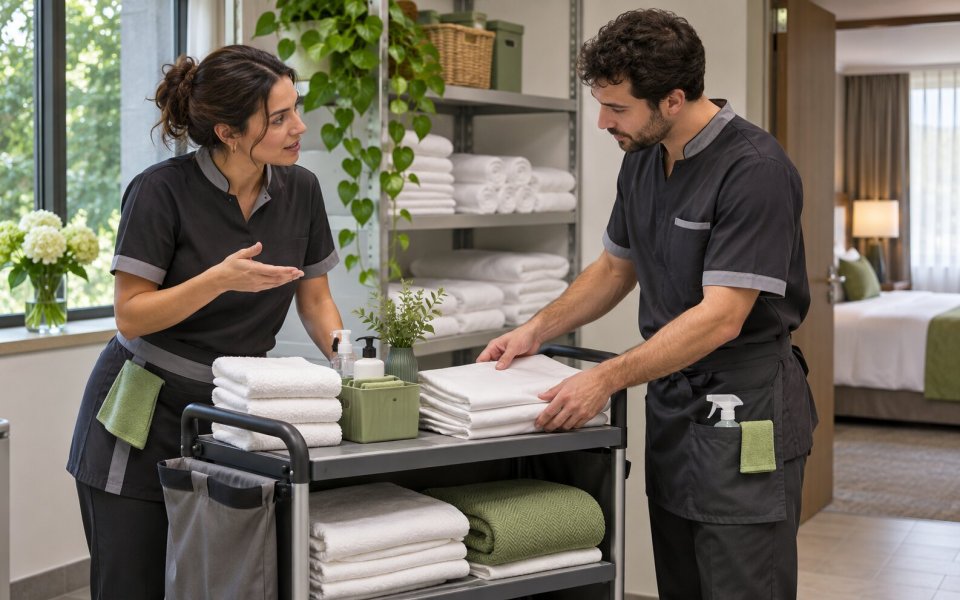
If people often run out of linen, stock the trolley by room type, without overloading it or blocking walkways. If low surfaces mean a lot of bending, try an adjustable handle with the team. For beds that are hard to make, try a suitable bed-making aid. INRS guidance for hotels
Compare a few similar rooms before and after. Count only the trips linked to the change. For example, a comparable round might go from three trips back to the linen store to one. Ask whether the work felt easier, whether the change made another task harder and whether the room was cleaned to the same standard.
If the change helps, add it to the job instructions in StayClean. Say where to pick up clean sets or how to stock the trolley. Use the cleaning protocol to pass on the new routine, not to monitor work pace. Don’t turn two avoided trips into another room to clean.