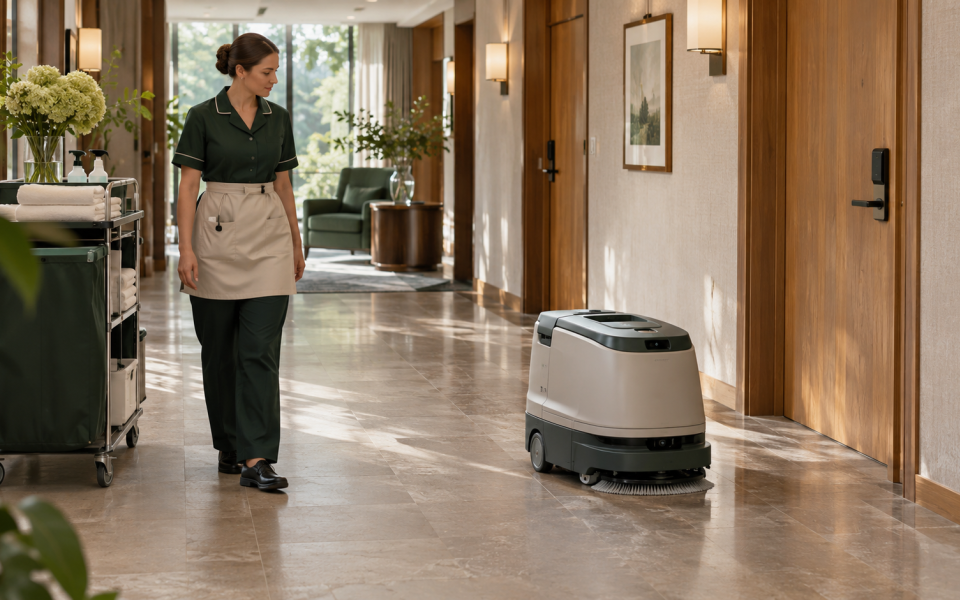
A machine working its way across a floor can be good news for a housekeeping team. But the team still needs to know what has been completed, what needs attention and who gives the go-ahead before guests arrive.
On 19 November 2026, ISSA Show North America announced the winners of its innovation programme, including a robotics category. The winning product in that category is intended for settings such as warehouses and retail sites. This signals the industry's interest in automation; it does not demonstrate that one piece of equipment is suitable for every area of a hotel. Source: ISSA, 19 November 2026.
For accommodation operators, we suggest a simple approach: start with the work that needs doing, then assess the tool.
Break cleaning down before choosing a machine
“Cleaning an entire storey” covers several operations: treating floor surfaces, preparing rooms, replenishing supplies, changing linen, checking equipment and reporting issues. Trying to automate the whole process at once makes it harder to compare solutions properly.
Start with one task sheet for each activity. Specify the area involved, the expected result, access constraints and the available time slot. Separate regular spaces from areas where furniture frequently moves. For each piece of equipment under consideration, compare this sheet with the manufacturer's operating conditions and an on-site trial.
A useful trial has a limited, observable scope: an identified corridor, a defined time and a procedure for follow-up work. Avoid starting on days when every room needs to be turned around at once.
Assign responsibility for exceptions
A closed door, an obstacle, a low battery or an inaccessible area should lead to a clear action. Who receives the information? Who decides to stop the machine's run? Who takes over the task?
Prepare a short list of situations to handle manually. This might include lost property, damage, textiles that need replacing and finishing work beyond the equipment's scope. The list will depend on your property, equipment and chosen procedures.
Also plan for machine maintenance and training for authorised operators. This time is part of the actual work. It should appear in the trial review rather than disappearing behind a figure for autonomous operating time.
Keep the final check independent
The status “cycle completed” describes an operation. To decide whether an area is ready, choose a few concrete acceptance criteria: planned areas actually treated, no overlooked obstacles, finishing work completed, and issues resolved or passed on.
During a pilot, compare several similar days. Record the human time spent on preparation, assistance, maintenance and follow-up work, along with delays and defects identified. A useful measurement covers the entire process, not just the minutes when the machine is moving.
Involve housekeeping staff in this review. They can explain why a supposedly simple run requires equipment to be moved or two return visits to the same area. These observations help refine the procedure without declaring success or failure too quickly.
Connect the trial to the property's schedule
Finally, define who approves the result and how follow-up work is tracked through to completion. Reception should know the actual readiness status, with a named contact when a deadline changes.
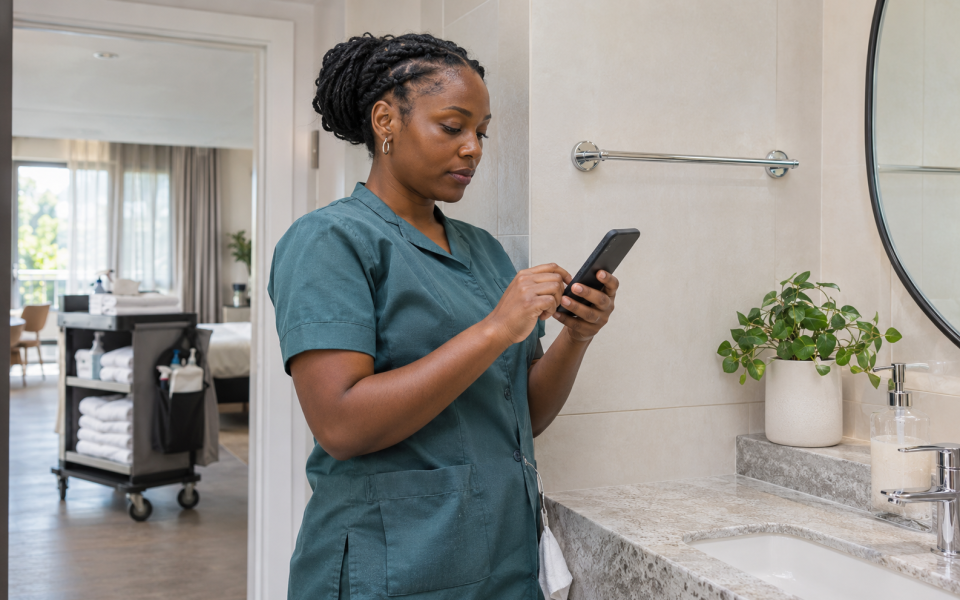
StayClean supports the organisation of cleaning jobs, instructions and on-site tracking. Clients schedule their cleaning according to their needs. The approach described here assumes no connection between StayClean and a robot, and no control of machines through the platform.
Before expanding a trial, ask the team one final question: can we explain, for every task, who does the work and who checks it? That is a stronger foundation than a general promise of autonomy.