
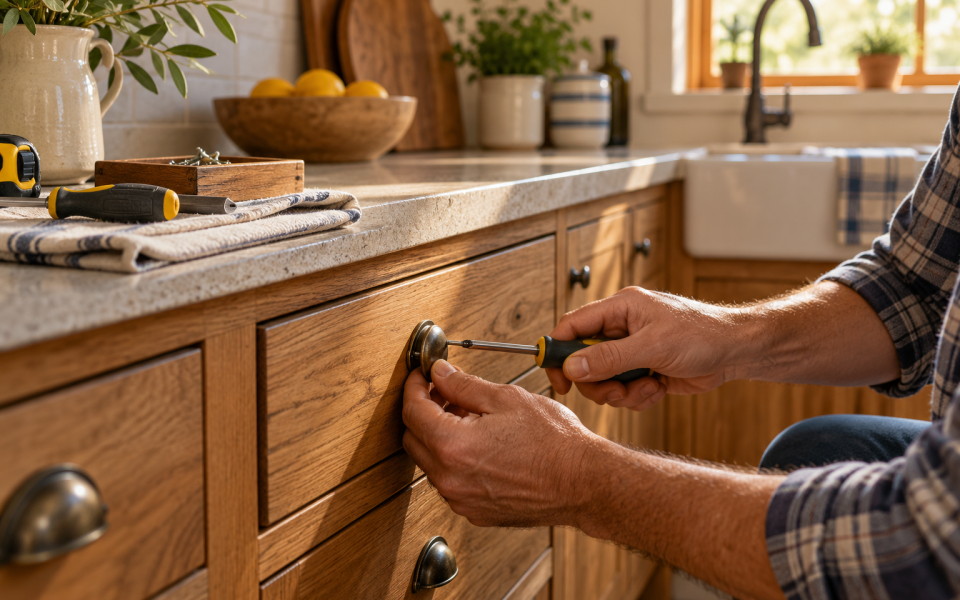
A loose handle, a sticking drawer, a split seam in a cover: in a holiday rental, a minor defect can quickly lead to an entire item being replaced. Between stays, the quickest solution can sometimes seem like the only option. Yet preparing a decision leaves more room for repair and reuse.
ADEME has announced that the European Week for Waste Reduction will take place from 21 to 29 November 2026, focusing on responsible consumption and “fast deco”. In late October, there is about a month to test a simple method in a few properties without reorganising everything.
1. Start with a useful inventory
The first step is to describe what is actually damaged. For each item, record the property, its location, the observed defect and the date it was identified. A focused photo can supplement the description without showing guests or their personal belongings.
“Loose kitchen drawer handle” provides actionable information. “Cabinet needs replacing” already contains a conclusion. This distinction avoids making the decision on behalf of the person responsible for assessing the item. It also helps identify recurring problems across several properties.
2. Distinguish repair, reuse and replacement
A responsible person then examines the options: repair the component, reuse an available and suitable part, or replace the item. Its overall condition, availability of parts, time before the next arrival and proposed cost all inform the decision. A repair is not automatically cheaper or always appropriate.
Safety and hygiene remain priorities. Equipment that presents a risk must be taken out of use until assessed. Electrical work, structural repairs and any operation requiring specific expertise must be entrusted to a qualified professional. No temporary fix should make equipment dangerous or impossible to clean properly.
3. Obtain approval before committing
Where the owner's agreement is required, send a clear proposal: the item concerned, the observed defect, the proposed solution, a quote or estimate and the stated timeframe. Also plan an alternative if the repair cannot be completed before the next arrival.
This approval must precede the spending and the work. The manager then has an explicit decision rather than presumed agreement in a conversation. The person identifying the defect does not have to authorise the budget or choose a technical solution outside their responsibilities.
4. Track the facts through to completion
A reported problem is not a resolved problem. Tracking should distinguish a few clear stages: to be assessed, awaiting approval, work scheduled, work completed and checks carried out. A shared spreadsheet may be enough to start with, provided an owner and a next step are assigned.
After the work, record what was done, by whom and on what date. Check that the item works and can be used appropriately before making it available again. A photo can document the result, but it does not replace a suitable check. If replacement remains necessary, direct the old item to an appropriate reuse, recycling or disposal route according to its condition.
5. Start small before November
Selecting a few properties and a short list of items makes it possible to test the method. At the end of the pilot, count the defects assessed, repairs actually completed and items reused. Do not present a planned repair as waste already prevented or announce savings without verified data.
At StayClean, customers schedule their cleaning. Observations made on site can provide a starting point for this coordination without turning cleaning into a repair service. Decisions, authorisation and the work itself remain with the competent people. The pilot has a practical objective: identify what deserves a second life, then verify that the decision was actually carried through.